Investment Observations


“People’s minds are changed through observation and not through argument.” – Will Rogers


“If you make listening and observation your occupation you will gain much more than you can by talk.” – Robert Baden-Powell


“The important thing is not to stop questioning. Curiosity has its own reason for existing.” – Albert Einstein


Autumn months are more volatile; 2017 was an aberration

October is, on average, the most volatile month of the year for US equity markets. From 1993, the year the VIX index was launched, through 2017, the average level for the VIX for the month of October has been 21.8 per cent.

In October 2017, the VIX averaged 10.8 per cent, which at the time was the lowest monthly average for any month on record since the VIX index was launched. The complacency witnessed in capital markets last year was an aberration and should not be the yardstick by which investors manage their portfolios.


US mid-term elections: History is on the side of equity markets

Regardless of how midterm elections turn out, equity investors tend to be the big winner. At least that is what history suggests.

The S&P 500 index has climbed in the twelve months following each of the midterm elections going back to 1946, with an average return of 16.7 per cent. That is eighteen elections irrespective of who won and what changes were wrought on the balance of power.

Do not let the typical level of volatility witnessed in months starting with the letter ‘O’ put you on the wrong side of history. Stay long US stocks.


Treasuries: “The dog that didn’t bark”

If stocks go down, treasuries go up. Rinse and repeat. This is the axiom on which strategic asset allocations of institutional investors and quantitative investment strategies, such as ‘all-weather’ and ‘risk parity’, have been built.

Yet this past month we have seen treasuries fail to bounce even though global equity markets have sold off. This failure is even more surprising given that speculative short futures positions across the US Treasury bond curve are at or near record highs. The inability of bonds to rally in the face of an equity market sell-off gives credence to the argument that the short bond positions are not speculative but rather hedges to long positions held by institutional investors and / or hedge funds.


Gold: Risk-off rally?

Unlike treasuries, the recent sell-off in stocks has coincided with a strengthening of the price of gold. This is all the more surprising when we consider that the US dollar has not weakened but rather strengthened as well.


Is gold the new hedge to stock market volatility? We are not sure. The recent rally might just be a case of unwinding of oversold conditions or of speculative investors closing their short gold positions in response to redemptions or margin calls caused by their declining long positions.

Alternatively, we wonder if a new bull market in precious metals is getting underway. It is, we feel, too early to tell and with gold miners remaining weak despite the gold price holding strengthening, it should give anyone bullish on the prospects of precious metals some pause.

For example, Newmont Mining, one of the few ‘blue chip’ gold mining companies, reported solid third quarter earnings yesterday that handily surpassed consensus estimates but still saw its stock price decline by almost 7 per cent. (Admittedly, at the time of writing some of yesterday’s weakness has been reversed today.)


SoftBank’s Vision Fund and the race for venture capital exits

Over the last twelve months there has been little to no incentive for venture capital backed companies to go public. They have had a much better alternative that does not come with the scrutiny faced by a publicly listed company: sell to SoftBank’s Vision Fund.

The Vision Fund, the largest ever venture capital fund raised anchored by capital commitment of US dollars 45 billion from Saudi Arabia, has been deploying capital at record pace with, what appears to us at least, limited consideration for valuation and due diligence.

Take for instance Benchmark Capital’s partial exit in Uber. The venture capital fund was able to monetise one of its most successful investments without a trade sale or public listing. Benchmark sold 14.5 per cent of its holding in Uber for around US dollars 900 million to the Vision Fund. Considering that Benchmark originally invested US dollars 12 million in Uber, the partial exit is quite the coup and something, we feel, that would not have been possible without a public listing were it not for the Vision Fund

Given the recent events surrounding Saudi Arabia and deceased Washington Post columnist Jamal Khashoggi, there is likely to be little appetite in Silicon Valley to accept  Saudi Arabian money henceforth. For example, Ari Emanuel’s media and entertainment group Endeavor is considering terminating a US dollars 400 million investment into the company by Saudi Arabia’s Public Investment Fund.

SoftBank’s Vision Fund is synonymous with Saudi Arabian money.

Masayoshi Son, SoftBank’s founder, was as recently as August talking up the prospects for a second Vision Fund with Saudi Arabia once again the cornerstone investor. Talks of the second fund have died down given recent events.

Given recent developments and Silicon Valley likely to shy away from engaging the Vision Fund any further, we suspect many venture capital backed “unicorns” are actively soliciting proposals from investment banks to help them go public.

We expect a flurry of tech-led IPO activity in the first half of 2019.


Brazilian election: Fears of a Latin Rodrigo Duterte

Brazil held the first round of general elections on 7 October, 2018 to elect the President, Vice President and the National Congress.

Rio de Janeiro congressman Jair Bolsonaro came first in the first round of the election. The run-off will be between him and former São Paulo mayor Fernando Haddad.

Fernando Haddad represents the Workers’ Party – the leftist party that has won the last four elections held in Brazil.

Former army captain and seven-time congressman Jair Bolsonaro is the right-wing candidate representing the Social Liberal Party. Barring a late twist, Mr Bolsonaro is expected to be elected as Brazil’s next president on Sunday. Mr Bolsonaro has ridden a wave of populism and angst against the incumbent party to put himself in pole position.

Since Mr Bolsonaro’s victory in the first round of the elections, Brazilian assets have rallied even as other emerging markets struggled. Market participants do not want the Worker’s Party back in power – fearing that the leftists will undo the reforms that have stabilised the Brazilian economy in the aftermath of the 2014-16 recession. Moreover, there is hope that Mr Bolsonaro will continue on the path of reforming the Brazilian economy.

Mr Bolsonaro’s proposed economic team, should he come into power as expected, will be made up of technocrats under the leadership of University of Chicago-trained financier Paulo Guedes. Mr Guedes is an advocate of deep public spending cuts and deficit reduction with the seemingly incongruent goals of reigniting consumer and business confidence. He has advised Mr Bolsonaro to push ahead with painful reforms, should he be elected, from the very beginning of his term. In particular, Mr Guedes is pushing for social security and pension reform that would trim benefits and raise the state retirement age to 65 for men, and 62 for women to be at the top of Mr Bolsonaro’s agenda.

While right-wing candidate’s economic agenda appears to be encouraging, his social agenda is eerily reminiscent of the type of opinions expressed by Philippine President Rodrigo Duterte. Mr Bolsonaro, to quote the Financial Times, “is known as an apologist for the 1964-85 military dictatorship, for endorsing torture and for making disparaging remarks about homosexuals, women and black people.”

We are concerned that Mr Bolsonaro will try to prolong the wave of populism as much as possible by prioritising his social agenda over economic reforms. In particular, we would be surprised, if he makes the unpopular social security pension reforms his key priority early in his presidential term. In fact, during his campaign, Mr Bolsonaro went as far as criticising current president Michel Temer’s planned social security system reforms as well as the tax changes proposed by Mr Guedes.

Brazilian assets may continue to rally should the country elect Jair Bolsonaro as its 38th president on Sunday. We, however, prefer to tread carefully until there is more clarity on Mr Bolsonaro’s priorities once he is in office.


This post should not be considered as investment advice or a recommendation to purchase any particular security, strategy or investment product. References to specific securities and issuers are not intended to be, and should not be interpreted as, recommendations to purchase or sell such securities. Information contained herein has been obtained from sources believed to be reliable, but not guaranteed.

Late Cycle Signals and Yield Curve Dynamics


“Everything turns in circles and spirals with the cosmic heart until infinity. Everything has a vibration that spirals inward or outward — and everything turns together in the same direction at the same time. This vibration keeps going: it becomes born and expands or closes and destructs — only to repeat the cycle again in opposite current. Like a lotus, it opens or closes, dies and is born again. Such is also the story of the sun and moon, of me and you. Nothing truly dies. All energy simply transforms.” – Rise Up and Salute the Sun: The Writings of Suzy Kassem by Suzy Kassem


“We say that flowers return every spring, but that is a lie. It is true that the world is renewed. It is also true that that renewal comes at a price, for even if the flower grows from an ancient vine, the flowers of spring are themselves new to the world, untried and untested.


The flower that wilted last year is gone. Petals once fallen are fallen forever. Flowers do not return in the spring, rather they are replaced. It is in this difference between returned and replaced that the price of renewal is paid.


And as it is for spring flowers, so it is for us.” – The Price of Spring by Daniel Abraham


“There are constant cycles in history. There is loss, but it is always followed by regeneration. The tales of our elders who remember such cycles are very important to us now.” – Carmen Agra Deedy


Late Cycle Signals


Each business cycle is unique. Certain patterns, however, have tended to repeat across business cycles with the ebbs and flows in the level of economic activity.

The late stage of the business cycle is often characterised by an overheated economy, restrictive monetary policy, tight credit markets, low unemployment rates and peaking corporate profit margins.  These are not the types of signals that form part of our discussion on the late cycle this week. Instead we focus on behavioural clues from the financial services and investment management sector that signal that we may have potentially entered the late stage of the business cycle – often the most rewarding, but also the most precarious, phase of bull market for investors.


1. Liquidity events for investors in ride hailing services companies


Few opportunities have captured the imagination of venture capital investors over the last decade as the one represented by ride hailing services companies such as Uber, Lyft, Didi Chuxing and Grab.


  • Didi Chuxing, China’s equivalent to Uber and valued at US dollars 56 billion during its last fundraising, is the most valuable start-up on the Mainland and counts Apple, Softbank and Uber amongst its shareholders. The start-up is estimated to have raised US dollars 20.6 billion in funding over 17 rounds of financing.


  • Southeast Asia’s leading ride hailing services company, Grab, was valued at over US dollars 10 billion in a fundraising round in June this year and has received US dollars 1 billion in funding from Toyota.


With such eye-popping valuations it should come as no surprise that most, if not all, of the leading ride hailing companies the world over are weighing up potential liquidity events, be it an initial public offering or a trade sale to larger competitors or strategic investors. The investors in these companies are undoubtedly eager to convert their paper profits into realised gains in the form of cold hard cash.


  • Lyft has hired JP Morgan to lead its IPO and is aiming to beat its much larger rival, Uber, in becoming the first ride hailing services company to be publicly listed


  • Uber has reportedly received proposals from Wall Street valuing the company as high as US dollars 120 billion – almost 67 per cent higher than the valuation at its last round of fundraising


  • Didi Chuxing is reportedly weighing up the possibility of a public offering in 2019


  • Careem Networks, the Middle East’s leading ride hailing services company, and Uber are rumoured to be in talks for a possible merger or an outright acquisition of the Middle Eastern business by Uber. Careem was valued at US dollars 1 billion during a fundraising round in December 2016. Bloomberg reported in September that the acquisition of Careem by Uber would value it between US dollars 2 to 2.5 billion – a 100 to 150 per cent increase in less than 24 months.


In 2007, The Blackstone Group, the leading alternative asset management firm, successfully listed on the New York Stock Exchange, selling a 12.3 per cent stake in return for  US dollars 4.13 billion. Blackstone’s listing was, at the time, the largest US IPO since 2002.

Although Blackstone was able to successfully list, many of its rivals – including Apollo Global Management, Kohlberg Kravis & Roberts and the Carlyle Group – missed the opportunity to float ahead of the global financial crisis and had to shelve their plans and wait for a more conducive environment.

We worry that a similar fate awaits the riding hailing services industry, where it becomes a case of one IPO and done and the remaining companies’ plans are delayed by an abrupt end to the current iteration of the US equity bull market.


2. INVESCO to buy OppenheimerFunds


INVESCO, the independent investment company headquartered in Atlanta, Georgia, this week agreed to buy rival Massachusetts Mutual Life Insurance’s OppenheimerFunds unit for US dollars 5.7 billion. According to the Wall Street Journal:

“Invesco will pay for the deal with 81.9 million common shares and another $4 billion in preferred shares, making MassMutual the firm’s largest stockholder. Including OppenheimerFunds, Invesco will manage more than $1.2 trillion in assets.”

In the summer of 2009, BlackRock acquired Barclays Global Investors, including its highly coveted iShares franchise, for US dollars 13.5 billion and created a combined entity with, at the time, approximately US dollars 2.7 trillion of assets under management.

BlackRock’s timing was impeccable: a near decade long equity bull market ensued and, even more importantly for BlackRock, the company put itself in the prime position to reap the rewards of the rise of passive investing.

The rationale for the OppenheimerFunds acquisition according to the Wall Street Journal paraphrasing INVESCO CEO Martin Flanagan is to: “strengthen Invesco’s position in some businesses that have been proven resilient to the move toward passive investing, including international and emerging-markets stock funds.”

We are curious to see if INVESCO’s decision today turns out to be as flawed as BlackRock’s decision in 2009 was impeccable.


3. Middle market alternative asset managers selling stakes


In recent years, seemingly successful, mid-sized alternative asset management firms have started selling equity stakes to their much larger, more established competitors such as Neuberger Berman, The Blackstone Group and the Carlyle Group.

Dyal Capital, a unit of Neuberger Berman, has closed 30 or more transactions acquiring stakes in alternative asset managers over the last 2 to 3 years, including a strategic investment into Silver Lake Partners. Dyal presently manages three funds with US dollars 9 billion in assets under management and is set to complete fundraising over 5 billion for a fourth fund.

The most recent of such sales comes from New Mountain Capital, which manages private equity, public equity and credit funds with more than US dollars 20 billion in assets under management. The company has reportedly sold a 9 per cent stake to Blackstone Strategic Capital Holdings.

We wonder: what are the chances that highly successful private equity and alternative investment firms would sell their stakes at anything but close to peak valuations?


Yield Curve Dynamics


Given that we have discussed late cycle signals above, we wanted to touch upon the historical dynamics of the Treasury yield curve when it has either gone (i) from inverted to flat or (ii) from flat to positively slopping.

Prior to sharing our findings, we wanted to share some analysis for the period starting 1959 and ending 1984 from Interest Rates, the Markets, and the New Financial World (1985) by Henry Kaufman:


“If the risk in investing in the long market is still great immediately following the point of maximum inversion, when does the long market offer the best opportunity? To answer this question, it is necessary to examine the swings in the U.S. Government securities yield curve during the past quarter century.

These swings are:


  1. from extreme negative (short rates above long) to flat
  2. from flat to extreme positive (long rates above short)
  3. from extreme positive to flat
  4. from flat to extreme negative


The results are as follows:


1. When the yield curve for government securities swung from extreme negative to flat, long yields actually increased with one exception – the 1980 cycle. In one of these cycles, there was greater rise in long yields than in short rates. In all other instances, however, short rates fell while long yields rose.


2. When the yield curve moved from flat to extreme positive, with long yields going above short, in all cycles long yields fell in conjunction with a more sizable drop in short rates.


3. The swing from extreme positive to flat can be quite dangerous in the long bond sector. In the four complete cycles… yield increases average 104 basis points for long-term issues, ranging from 40 to 220 basis points.


4. The most dangerous period of all for investors in long bonds, however, occurs when the yield curve moves from flat to extremely negative, with short rates moving up above long.”


Interestingly, the period around the time of publishing of Mr Kaufman’s book was the exception for how the long end of the curve reacted when the yield curve went from extreme negative to flat. And Mr Kaufman speculated in his book if the long-running bond bear market was over or not. With the benefit of hindsight we know that the bond bear market had indeed ended during the early 1980s.

For the period from 1980 till date and with respect to cycles where the yield curve went either (i) from inverted to flat or (ii) from flat to positively slopping, we make the following observations (based on the yield differential between 2 and 10 year Treasury securities):


  1. 1980 – 1982: the yield curve went from extreme negative to flat with both short and long rates declining. Short rates declined faster than long rates.


  1. 1988 – 1992: from flat to extreme positive with both short and long rates declining. Short rates declined faster than long rates.


  1. 2000 – 2003: from inverted to flat and then to extreme positive with both short and long rates declining. Short rates declined faster than long rates.


  1. 2005 – 2010: from flat to extreme positive with both short and long rates declining. Short rates declined faster than long rates.


In recent weeks we have witnessed the yield curve correct its flattening trend due to a sell-off at the long-end. The yield curve has steepened due to higher long-term yields – a phenomena last witnessed in the 1970s. These are still early days and the recent sell-off at the long-end may be nothing more than a blip. If, however, the yield curve continues to steepen due to increasing long-term yields it would be an ominous sign for bond bulls.

Much like Mr Kaufman speculated that the bond bear market may have ended in the early 1980s, the recent shifts in the Treasury yield curve and the forthcoming supply of US Treasury securities have us wondering if the multi-decade bond bull market is over.


This post should not be considered as investment advice or a recommendation to purchase any particular security, strategy or investment product. References to specific securities and issuers are not intended to be, and should not be interpreted as, recommendations to purchase or sell such securities. Information contained herein has been obtained from sources believed to be reliable, but not guaranteed.


Tightening Only in Name


“We cannot control the way people interpret our ideas or thoughts, but we can control the words and tones we choose to convey them. Peace is built on understanding, and wars are built on misunderstandings. Never underestimate the power of a single word, and never recklessly throw around words. One wrong word, or misinterpreted word, can change the meaning of an entire sentence and start a war. And one right word, or one kind word, can grant you the heavens and open doors.” – Rise Up and Salute the Sun: The Writings of Suzy Kassem by Suzy Kassem


In November 2010, esteemed investors and academics including Cliff Asness (AQR Capital), Jim Chanos  (Kynikos Associates), Seth Klarman (Baupost Group),  Paul Singer (Elliot Associates) and Michael J. Boskin, the T. M. Friedman Professor of Economics and senior fellow at Stanford University’s Hoover Institution, sent, the then Federal Reserve Chairman, Ben Bernanke an open letter warning him of the consequences of undertaking a second round of quantitative easing:  “The planned asset purchases risk currency debasement and inflation, and we do not think they will achieve the Fed’s objective of promoting employment.”


Monetary policy transmission mechanisms are amongst both the most confusing and most important concepts for financial market participants to come to grips with. Many of us misunderstood quantitative easing. We do not want to repeat the same mistake and misinterpret quantitative tightening.


For starters, quantitative tightening in not what is “rattling markets”.


One of the best explanations we could find on why quantitative tightening is not tightening in the normal sense comes from The Holy Grail of Macroeconomics: Lessons from Japan’s Great Recession written by Mr Richard Koo, Chief Economist at Nomura Research Institute. We quote (emphasis added):


“Under quantitative easing, the Bank of Japan supplied liquidity to the market. It did so by purchasing government bonds held by commercial banks, and crediting money to their current accounts. This process was repeated until the aggregate value of banks’ current accounts had risen to more than ‌¥30 trillion. To terminate the policy, this process had to be reversed. In theory, this would involve the bank selling government bonds to commercial banks to absorb the excess funds in their current accounts.


Selling government bonds should cause their price to fall, driving up interest rates. In practice, however, abandoning quantitative easing was not a “tightening” of monetary policy in the ordinary sense. In a standard tightening phase, the Bank of Japan responds to an overheated economy by selling bonds to commercial banks to mop up market liquidity and reduce the volume of money circulating. Commercial banks, on the other hand, normally try to maximise income on available funds by reducing liquidity on hand to the statutory minimum or thereabouts, and lend or invest the rest of their funds. Under these circumstances, commercial banks would not have the surplus funds needed to buy bonds from the Bank of Japan – their only option would be to sell other assets. In some cases, they might even consider calling in loans. So when the Bank of Japan starts selling bonds to commercial banks, banks are prompted to sell other financial instruments, driving down the price of financial assets in general (and thereby pushing up interest rates). This chain reaction of selling has a restrictive impact, and serves to cool economic activity.


But in terminating quantitative easing, the ¥25 trillion in surplus funds that the Bank of Japan sought to mop up was already sitting in commercial banks’ current accounts with the central bank, which pays no interest. Facing an absence of private-sector borrowers, the commercial banks could do nothing else with these funds. So when the Bank of Japan asked the banks to buy ¥25 trillion of government bonds, they paid for the purchases with money already on deposit with the Bank of Japan.


Because the banks did not need to raise funds elsewhere, the operation had none of the negative impact of a normal tightening operation, and interest rates did not rise significantly. Quantitative easing – the great non-event of the fifteen-year recession – vanished without a trace.”


For good measure, we also quote from Dr. Manmohan Singh’s article from FT Alphaville in April 2017, where he argues that the unwinding of the Fed’s balance sheet “may not be tantamount to tightening”:


“Deposits have taken too much balance-sheet space of the banking sector with excess reserves of the banks at the Fed are presently over $2tn. This inhibits financial intermediation and in turn, monetary policy transmission. As an analogy, oil is only needed for lubricating a car’s engine; similarly, excess reserves, are needed only to smoothen out the need for reserves in the financial system. They were close to zero before the Lehman crisis. Now instead of an “oil change” we are carrying the oil in the car trunk, in our homes, everywhere.


Markets currently can digest duration of good collateral. As seen in the past year, policy rate hikes may not percolate to the long end of the yield curve and vice versa, because the investor base is very different for the short and long end.


For example, from the time of the Fed’s 25 basis-point rate hike on Dec 16, 2105 until the eve of U.S. elections on November 8, 2016, the yield on the 10-year US Treasury note actually declined, to 1. 8 per cent from 2.3 per cent, as markets digested duration despite sizeable sales of Treasuries by many emerging markets throughout 2016.


So the unwinding of a central bank’s balance sheet may not result in tightening. Collateral that will be released (from the asset side of the Fed balance sheet) to the market, with reuse, is a far better lubricant for the financial system than the reduction in banking system deposits, (i.e., reserves balances on the liability side of the Fed balance sheet). Although the Dodd Frank Act and Basel III make it more expensive for collateral to be reused, the increase in the balance sheet space of the banking system (due to the central bank unwind) may more than neutralize the regulatory cost. Thus, a leaner central bank balance sheet, if it doesn’t result in a tightening effect, could justify a much higher policy rate in this cycle than currently being anticipated.”


Investment Perspective


If quantitative tightening is not tightening in the normal sense, this begs the question of what has gotten into global stock markets this year.  The simple answer is: we do not know for sure. It could be any one of a number of reasons or a combination of them. Some of the commonly cited explanations we have come across for the recent selloff include the escalating trade dispute between the US and China, the Chinese yuan breaking 6.9 to the US dollar, contagion from the selloff in emerging markets, fallout from the bond market route and, our favourite, that “TINA” (there is no alternative) no longer applies to stocks as the short end of the yield curve is now viable investment opportunity.


We think it may simply be a case of temporary exhaustion after accelerated pension contributions and cash repatriation by US corporations bid up US asset prices. With the deadline for accelerated pension contributions having passed and the rate of cash repatriation by US corporations slowing, the presence of ‘price insensitive’ buyers is likely to have diminished.


Regardless of the drivers behind the recent selloff, we think there still are compelling reasons to remain long US stocks. To expand on our reasoning, we return to Mr Koo’s book and present his yin-yang cycle of bubbles and balance sheet recessions:


Yin yang.png


We think, with the capital spending incentives in the Trump tax cuts, low employment and strong consumer spending, the US economy is in stage six of Mr Koo’s framework. US corporations are finally showing signs of increasing capital investment and there is a growing chance that the borrowing needs of the US Treasury are going to start crowding out the private sector. This could exasperate the situation for the US private sector, which is already under pressure to invest in increasing productivity to counteract tightness in the labour market and the pressure on margins from rising wages.


We think that under present conditions, the US economy can quickly accelerate from stage six to stage nine – the US fiscal deficit is expected to accelerate in 2019, even excluding any potential boost in spending from a revival in President Trump’s infrastructure spending bill.


We remain long US equities and are increasingly looking for opportunities to allocate capital to the industrial sector. We also think the time to increase allocation to non-US equities is upon us – for now we defer that discussion to another update.


This post should not be considered as investment advice or a recommendation to purchase any particular security, strategy or investment product. References to specific securities and issuers are not intended to be, and should not be interpreted as, recommendations to purchase or sell such securities. Information contained herein has been obtained from sources believed to be reliable, but not guaranteed.


Trade Wars: Clearing the Way for a War of Attrition


“The two most powerful warriors are patience and time.” – Leo Tolstoy


“The primary thing when you take a sword in your hands is your intention to cut the enemy, whatever the means. Whenever you parry, hit, spring, strike or touch the enemy’s cutting sword, you must cut the enemy in the same movement. It is essential to attain this. If you think only of hitting, springing, striking or touching the enemy, you will not be able actually to cut him.” – Miyamoto Musashi, The Book of Five Rings


“Only an idiot tries to fight a war on two fronts, and only a madman tries to fight one on three.” – David Eddings, American novelist


A few updates relating to themes and topics we have written about in the recent past before we get to this week’s piece.

1. Two out of three companies we highlighted as potential value plays in Searching for Value in Retail in June have now announced that they are evaluating opportunities to go private.

The most recent of the announcements comes from Barnes & Noble $BKS which said on Wednesday that it is reviewing several offers to take the bookstore chain private. We are not surprised by this development and had expected as much when we wrote the following in June:

“Trading at a price to consensus forward earnings of around 10x and with a market capitalisation of under US dollars 500 million, $BKS remains a potential target for even the smallest of activist investors or private equity funds.”

The other company we discussed in the same piece was GameStop $GME, which at the start of September announced that it is engaged in discussions with third parties regarding a possible transaction to take the company private.


2. Following-up on Trucking: High Freight Rates and Record Truck Orders, orders for Class 8 semi-trucks increased 92 per cent year-over-year in September. Last month capped the highest ever recorded quarterly sales of big rigs in North America.

American trucking companies continue to struggle with tight capacity at the same time demand from the freight market remains strong.

We continue to play this theme through a long position in Allison Transmission $ALSN.


3. When the tech bubble popped at the start of the millennium, between 2001 and 2003, the S&P 500 and the NASDAQ 100 indices declined by 31.3 and 57.9 per cent on a total return basis, respectively. During the same period, Cameco Corporation $CCJ, the world’s largest uranium miner by market capitalisation, went up by more than 40 per cent.

Yesterday, as we witnessed global equity markets sell-off in response to (depending on who you ask) (i) tightening central bank policies and rising yields raising concerns about economic growth prospects, (ii) the accelerating sell-off in bond markets, or (iii) news that China secretly hacked the world’s leading tech companies, including Amazon and Apple, $CCJ closed up 5 per cent on the day.

Maybe history as Mark Twain said rhymes, maybe it is nothing, or just maybe it is one more sign of the increasing awareness of the nascent bull market underway in uranium.

CCJ.PNG


4. With the recent sell-off in the bond market, long-term Treasury yields have surged. Yields on the ten-year treasuries rose as high as 3.23 per cent on Wednesday, recording their highest level since 2011.

Does this level in yields make the long-end of the curve attractive for investors to start to re-allocate some equity exposure to long-term Treasury bonds? We think not.

Our thinking is driven by the following passage from Henry Kaufman’s book Interest Rates, the Markets, and the New Financial World in which he considers, in 1985, the possibility that the secular bond bear market may have come to an end:

“[T]wo credit market developments force me to be somewhat uncertain about the secular trend of long-term rates. One is the near-term performance of institutional investors, who in the restructured markets of recent decades generally will not commit funds when long when short rates are rising. The other development is the continued large supply of intermediate and long-term Governments that is likely to be forthcoming during the next period of monetary restraint. There is a fair chance that long yields will stay below their secular peaks, but the certainty of such an event would be greatly advanced with a sharp slowing of U.S. Government bond issuance and with the emergence of intermediate and long-term investment decisions by portfolio managers.”


In August this year, the US Treasury announced increases to its issuance of bonds in response to the US government’s rising deficit. This is the very opposite of what Mr Kaufman saw as a catalyst for declining long-term yields in 1985. Moreover, this increased issuance is baked in without the passing of President Trump’s infrastructure spending plan, which has been temporarily shelved. We suspect that Mr Trump’s infrastructure spending ambitions are likely to return to the fore following the upcoming mid-term elections. If an infrastructure spending bill of the scale Mr Trump has alluded to in the past come to pass, US Treasury bond issuance is only likely to further accelerate.

With the window for US companies to benefit from an added tax break this year by maximising their pension contributions now having passed, it will be interesting to see if institutional investors now become reluctant to allocate additional capital to long-dated Treasury bonds due to rising short rates.

The relative flatness of the yield curve, in our opinion, certainly does not warrant taking on the duration risk. At the same time, we do not recommend a short position in long-dated treasuries either – the negative carry is simply too costly at current yields.


On to this week’s piece where we discuss the United States-Mexico-Canada Agreement, or USMCA, the new trade deal between the US, Canada and Mexico that replaces the North American Free Trade Agreement, or NAFTA, and its implications on the on-going trade dispute between the US and China.

The many months of the will-they-won’t-they circle of negotiations between the US, Canada and Mexico have culminated in the USMCA, which will replace NAFTA. The new deal may not be as transformative as the Trump Administration would have us believe but nonetheless has some important changes. Some of the salient features of the new agreement include:


1. Automobiles produced in the trade bloc will only qualify for zero tariffs if at least 75 per cent of their components are manufactured in Mexico, the US, or Canada versus 62.5 per cent under NAFTA.

The increased local component requirement is, we feel, far more to do with limiting indirect, tariff-free imports of Chinese products into the US than it is to do with promoting auto parts production in North America. The latter, we think, is an added benefit as opposed to the Trump Administration’s end goal.


2. Also relating to automobiles, the new agreement calls for 40 to 45 per cent of content to be produced by workers earning wages of at least US dollars 16 an hour by the year 2023.

This provision specifically targets the relative cost competitiveness of Mexico and is likely to appease Trump faithfuls hoping for policies aimed at stemming the flow of manufacturing jobs from the US to Mexico.

How this provision will be monitored remains anyone’s guess. Nonetheless, the USMCA, unlike NAFTA, does allow each country to sanction the others for labour violations that impact trade and therefore it may well become that the threat is used to coerce Mexico into complying with the minimum wage requirements.


3. Canada will improve the level of access to its dairy market afforded to the US. It will start with a six-month phase-in that allows US producers up to a 3.6 per cent share of the Canadian dairy market, which translates into approximately US dollars 70 million in increased exports for US farmers.

Canada also agreed to eliminate Class 7 – a Canada-wide domestic policy, creating a lower-priced class of industrial milk. The policy made certain categories of locally produced high-protein milk products cheaper than standard milk products from the US.


4. The term of a copyright will be increased from 50 years beyond the life of the author to 70 years beyond the life of the author. This amendment particularly benefits pharmaceutical and technology companies in the US. American companies’ investment in research and development far outstrips that made by their Canadian and Mexican peers

Another notable victory for pharmaceuticals is the increased protection for biologics patents from eight years to ten years.


5. NAFTA had an indefinite life; the USMCA will expire in 16 years.

The US, Canada and Mexico will formally review the agreement in six years to determine whether an extension beyond 16 years is warranted or not.


The successful conclusion of negotiations between the three countries, subject of course to Congressional approval, combined with the trade related truce declared with the European Union in the summer, should be seen as a victory for US Trade Representative Robert E. Lighthizer.

Earlier this year, in AIG, Robert E. Lighthizer, Made in China 2025, and the Semiconductors Bull Market we wrote (emphasis added):


Mr Lighthizer’s primary objectives with respect to US-Sino trade relations are (1) for China to open up its economy – by removing tariffs and ownership limits – for the benefit of Corporate America and (2) to put an end to Chinese practices that erode the competitive advantages enjoyed by US corporations – practices such as forcing technology transfer as a condition for market access.

Mr Lighthizer’s goals are ambitious. They will require time and patience from everyone – including President Trump, Chinese officials, US allies, and investors. For that, he will need to focus Mr Trump’s attention on China. He will not want the President continuing his thus far ad hoc approach to US trade policy. If NAFTA and other trade deals under negotiations with allies such as South Korea are dealt with swiftly, we would take that as a clear signal that Mr Lighthizer is in control of driving US trade policy.


Mr Trump and his band of trade warriors and security hawks are now in the clear to focus their attention on China and deal with the threat it poses to the US’s global economic, military and technological leadership.


The Big Hack

On Thursday, Bloomberg Businessweek ran a ground breaking story confirming the Trump Administration’s fears relating to Chinese espionage and intellectual property theft. The Big Hack: How China Used a Tiny Chip to Infiltrate U.S. Companies details how Chinese spies hacked some of the leading American technology companies, including the likes of Apple and Amazon, and compromised their supply chains.

Bloomberg’s revelations were swiftly followed by strongly worded denials by Apple and Amazon.

The timing of Bloomberg’s report – coming so soon after the USMCA negotiations were completed successfully – regardless of whether the allegations are true or not is notable.

Coincidentally, also on Thursday, Vice President Pence, in a speech at the Hudson Institute, criticised China on a broad range of issues, from Beijing’s supposed meddling in US elections, unfair trade practices, espionage, and the Belt and Road Initiative.


American Corporate Interests

The main hurdle for the Trump Administration in its dispute with China is the US dollars 250 billion invested in China by Corporate America.

We see the recent moves by the Administration in upping the ante on China, by disseminating the theft and espionage narrative through the media and new rounds of tariffs, as a means to provoke Corporate America to begin reengineering its supply chains away from China. Whether this happens, and at what the cost will be, remains to be seen.


War of Attrition

We expect US-China tensions to continue to escalate especially as we draw closer to mid-term election. And the Trump Administration to (threaten to) impose higher tariffs and use other economic and non-economic measures to pressurise the Chinese. The only near term reprieves we see from the US side are (i) a resounding defeat for the Republicans in the mid-term elections (not our base case) or (ii) a re-assessment of priorities by the Trump Administration following the elections.

From the Chinese perspective, the short-term impact of tariffs has partially been offset by the ~10 per cent fall in the renminbi’s value against the US dollar since April. A continued depreciation of the renminbi can further offset the impact of tariffs in the short run – for now this is not our base case.

The other alternative for Beijing is to stimulate its economy through infrastructure and housing investment to offset the external shock à la 2009 and 2015. However, given that Xi Jinping highlighted deleveraging as a key policy objective at the 19th National Congress, we expect fiscal stimulus to remain constrained until is absolutely necessary.

For now our base case is for China to continue to buy time with the President Trump and at the same time for it to work on deepening its economic and political ties in Asia, with its allies and the victims of a weaponised dollar.


This post should not be considered as investment advice or a recommendation to purchase any particular security, strategy or investment product. References to specific securities and issuers are not intended to be, and should not be interpreted as, recommendations to purchase or sell such securities. Information contained herein has been obtained from sources believed to be reliable, but not guaranteed.

Olson’s Paradox and the Successful Collusion Amongst Oil Exporters


“What most of these doomsday scenarios have gotten wrong is the fundamental idea of economics: people respond to incentives. If the price of a good goes up, people demand less of it, the companies that make it figure out how to make more of it, and everyone tries to figure out how to produce substitutes for it. Add to that the march of technological innovation (like the green revolution, birth control, etc.). The end result: markets figure out how to deal with problems of supply and demand.” – Steven D. Levitt


“The only thing about sanctions is that, like a lot of drone strikes, there are countless unintended victims.” – Henry Rollins, American musician


“The English language has 112 words for deception, according to one count, each with a different shade of meaning: collusion, fakery, malingering, self-deception, confabulation, prevarication, exaggeration, denial.” – Robin Marantz Henig, contributing author to the New York Times


Mancur Olson in his seminal book The Logic of Collective Action: Public Goods and the Theory of Groups challenged the prevailing wisdom during his time and developed a theory of collective action, commonly referred to as Olson’s Paradox, to explain why the existence of a common interest among a group of people is not sufficient to induce cooperative behaviour amongst the members of the group.

Olson argued that “unless the number of individuals in a group is quite small, or unless there is coercion or some other special device to make individuals act in their common interest, rational, self-interested individuals will not act to achieve their common or group interests.” In a scenario where a change is being proposed and there are two rival groups contesting said change, and the number of members in one group vastly outnumbers those in the other group, the theory poses that the smaller group will have an organising advantage over the larger group and is thus far more likely to achieve a winning outcome.

Oil importing nations greatly outnumber oil exporting nations. And it almost goes without saying that rising oil prices richly benefit oil exporting nations while the gains of declining oil prices are more modestly divided amongst the oil importing nations. Oil exporters then have both (i) a greater incentive to push up the price of oil than do oil importers to push it down and (ii) an organising advantage. It is this combination of incentive and advantage that enabled OPEC and Russia et alia (NOPEC) to implement and maintain joint production cuts that stabilised and eventually propelled oil prices higher.

Oil prices have ripped higher this week, the price of Brent Crude has pushed through the US dollars 80 per barrel mark – a level previously unreached since the collapse in oil prices in late 2014; the level may have remained unreachable had it not been for the Trump Administration’s reinstatement of economic sanctions on the Islamic Republic of Iran in May this year.

The catalyst for this week’s push higher is seen to be the lack of response coming from the OPEC-NOPEC alliance to President Trump’s protestations for an increase in production to cool prices. Mr Trump, it seems, is asking for his vig as the bully who ejected Iranian oil from global markets.

Even though OPEC did indicate that it has the necessary capacity to replace Iranian supplies markets remain concerned about a supply deficit next year, especially with infrastructure bottlenecks limiting supply from shale.

The International Energy Agency (IEA) estimates oil demand growth to average 1.5 million barrels per day in 2019. Assuming that the moderate pace of global economic growth anticipated for 2019 is not derailed by the on-going trade conflict between China and the US, realised demand levels should not differ significantly from the estimate.

The supply side is where the challenge, we think, lies.

In the absence of renewed sanctions on Iran, the supply-demand dynamics would have remained evenly balanced. Shale production has continued to exceed expectations; US production has reached 11 million barrels per day – increasing by 1.6 million barrels per day over the course of the last 12 months. With oil prices as high as they are, shale producers are likely to continue pushing for increased output and US production may well continue to surprise to the upside.

The Trump Administration is likely to prove far less tolerant of importers breaching sanctions than the Obama Administration, which allowed China and other nations to continue exploiting legal loopholes to access Iranian oil

The impact of the Iranian sanctions on the oil supply-demand dynamic will come down to China and whether it chooses to comply with the US-led sanctions or not. We think China, at least in the near term, is far more likely to reduce (or completely halt) oil imports from Iran. Our thinking is led by the fact that the major Chinese oil corporations, such as SINOPEC, are listed on the New York Stock Exchange and have sprawling global operations that can easily be targeted by the US. Given the ZTE experience, the Chinese leadership, we believe, is unlikely to want one more of its national champions to get caught in the Trump Administration’s cross hairs.

If we our correct in our thinking on China, oil markets will end up losing a large chunk of the 1.5 million barrels per day of Iranian output starting November. Add this to curtailed Venezuelan output and the world could find itself in an oil supply deficit anywhere in the range of 2 to 4 million barrels per day in 2019, depending on how shale and OPEC production ramps up following the sanctions.


Investment Perspective


The figure of US dollars 100 per barrel of oil has been bandied in headlines recently. We think the three-figure market is largely symbolic and not one that concerns us much. Nonetheless, given the high likelihood of a supply deficit occurring next year, we expect oil prices to remain high (if not move higher) until we see a meaningful supply response or an unexpected drop in demand.

We have been long the SPDR Energy Select Sector ETF $XLE since late October last year and remain long.


This post should not be considered as investment advice or a recommendation to purchase any particular security, strategy or investment product. References to specific securities and issuers are not intended to be, and should not be interpreted as, recommendations to purchase or sell such securities. Information contained herein has been obtained from sources believed to be reliable, but not guaranteed. 

Consumer Stocks: The Long and Short of it


“One of the funny things about the stock market is that every time one person buys, another sells, and both think they are astute.” – William Feather, American publisher and author


“When thinking about the future, it is fashionable to be pessimistic. Yet the evidence unequivocally belies such pessimism. Over the past centuries, humanity’s lot has improved dramatically – in the developed world, where it is rather obvious, but also in the developing world, where life expectancy has more than doubled in the past 100 years.” – Bjørn Lomborg, Danish author and President of Copenhagen Consensus Center


“What day is it?” asked Pooh.

“It’s today,” squeaked Piglet.

“My favourite day,” said Pooh.

Alexander Alan Milne


American consumers are the driving engine of the US economy – consumer spending is estimated to represent about two-thirds of US economic output. If sentiment surveys and retail sales are anything to go by then the American consumer, and by extension the US economy, is in rude health.

Consumer sentiment, as tracked by the University of Michigan, in September jumped to its second-highest level since 2004.

According to the Commerce Department, US retail sales increased by 6.6 per cent year-over-year in August – running well ahead of inflation. Month-on-month growth, however, was disappointing with August sales only increasing 0.1 per cent over July – whilst somewhat unsatisfactory, monthly comparisons tend to have a very low signal-to-noise ratio and are therefore misleading to read into, in our opinion.

Given the robust retail sales and soaring consumer sentiment, one would expect investors to be all bulled up on consumer stocks. Yet, as we compare the level of short interest across the constituents of the S&P500 Index we find that the greatest concentration of shorts (relative to free float) is in consumer related stocks. Investors remain circumspect about the prospects of consumer focused companies due to the potential impact of (i) rising interests on the disposable income of US consumers, and (ii) escalating trade tensions between the US and China on the companies’ supply chains, which in turn could meaningfully increase their cost of goods.

The below chart shows the average level of short interest (as a percentage of free float) by industry group. (Consumer related industry groups are highlighted in yellow.)


Average Short Interest across S&P500 Index by Industry Group 1Source: Bloomberg

The above chart shows that all but one of the consumer related industry groups has a higher level of short interest than the average level of short interest for a stock in the S&P500 Index. Moreover, the top three most shorted industry groups are all consumer related.

To further dissect the level of short interest across consumer related stocks, we focus in on the constituents of the SPDR S&P Retail $XRT and iShares US Consumer Goods $IYK exchange traded funds.


Retail

The average level of short interest for $XRT constituents is 7.5 per cent of free float. The most shorted sub-industry groups are food retail (something we have written about recently in The Challenge for Food & Beverage Retail Incumbents), automotive retail, and drug retail.

Average Short Interest across $XRT by Sub-Industry Group 2Source: Bloomberg

American department store chain Dillard’s is the most shorted stock amongst the constituents of $XRT with short interest making up a whopping 66.2 per cent of free float. The high level of short interest in the stock has not been rewarded by a declining price this year – the stock has generated a total return of 31.5 per cent year-to-date (as at market close on 19 September, 2018).

A further seven constituents have short interests that exceed 30 per cent of their free float, namely: Overstock.com (45.7 per cent), JC Penney (45.7 per cent), GameStop (39.6 per cent), Camping World Holdings (39.3 per cent), Hibbett Sports (36.4 per cent), The Buckle (36.0 per cent) and Carvana (31.3 per cent). The performance of these stocks has been more mixed with online retail company Overstock.com down 58.8 per cent year-to-date while online car dealer Carvana has generated an astonishing 208.3 per cent return year-to-date.

Many of the heavily shorted retail stocks appear to us to be the companies investors view as the mostly likely to be “Amazoned” in the near term.


Top 30 Most Shorted $XRT Constituents 3Source: Bloomberg


Total Return Year-to-Date of the Top 30 Most Shorted $XRT Constituents 4Source: Bloomberg


Generally, being short retail stocks has not been rewarding this year. The price return of $XRT is 14.2 per cent year-to-date versus 9.6 per cent year-to-date for the S&P500 Index.


Scatter Plot of Short Interest versus Year-to-Date Total Return for $XRT Constituents 5Source: Bloomberg

Note: Chart excludes Dillard’s and Caravan


Consumer Goods

The average level of short interest for $IYK constituents at 6.2 per cent of free float is lower than for $XRT constituents but still significantly higher than the average for the S&P500 Index. The most shorted sub-industry groups are tires & rubber, home furnishings and housewares & specialties.

Rising mortgage rates and the home buyer affordability index at ten-year lows are the likely reasons for the high levels of short interest in the home furnishings and housewares & specialties segments.

Average Short Interest across $IYK by Sub-Industry Group 6Source: Bloomberg


Only two stocks amongst the $IYK constituents have a short interest to free float ratio exceeding 30 per cent: B&G Foods (32.7 per cent) and Under Armour (31.8 per cent).

Generally, being short consumer goods stocks has been more rewarding than being short retail stocks. $IYK is down 3.5 per cent year-to-date. (We wrote about our concerns relating to the consumer goods sector last year in Unbranded: The Risk in Household Consumer Names.)


Top 30 Most Shorted $IYK Constituents 7Source: Bloomberg


Total Return Year-to-Date of the Top 30 Most Shorted $IYK Constituents 8Source: Bloomberg


Scatter Plot of Short Interest versus Year-to-Date Total Return for $IYK Constituents 9Source: Bloomberg


Investment Perspective


There is, we think, no clear playbook when it comes to heavily shorted stocks. Some portfolio managers we have interacted with in the past have occasionally gone long ‘consensus shorts’. Their track record is middling; they have done very well at times but also been burnt badly at other times.

Our approach is to identify heavily shorted stocks where we have a differentiated view on the prospects of near term earnings, valuation or the potential for the company to be acquired and to go long those stocks. (These lessons have been hard learned over time as in the past we have found ourselves far too closely aligned with consensus – as George S. Patton is known to have said: ‘If everyone is thinking alike, then somebody isn’t thinking’.)

In the instances our positioning and views prove correct, the high level of short interest acts like leverage and greatly amplifies returns in a relatively short amount of time.

Earlier this year we went long Under Armour based on our view that consensus earnings expectations had been deflated to such a degree that there was very little chance for the company to disappoint – with the stock price languishing at multi-year lows we deemed there to be little downside even if the company disappointed. As it transpired, the consensus view was indeed far too bleak and the stock quickly re-rated higher as the company outdid lowball expectations.

More recently, on 24 July, we went long and remain long kitchenware and home furnishings company Williams Sonoma $WSM. Short interest for the stock stands at over 20 per cent of free float, the company generated a best-in-class operating return on invested capital of 18.4 per cent in 2017 and trades at around consensus forward price-to-earnings of 15.4 times.

The retail and consumer goods sectors remain our preferred areas to search for heavily shorted stocks where we may have or develop a differentiated view.


This post should not be considered as investment advice or a recommendation to purchase any particular security, strategy or investment product. References to specific securities and issuers are not intended to be, and should not be interpreted as, recommendations to purchase or sell such securities. Information contained herein has been obtained from sources believed to be reliable, but not guaranteed. 

Thought Experiment: China Oil for Gold Contracts


“Too many people in the modern world view poetry as a luxury, not a necessity like petrol. But to me it’s the oil of life.” – Sir John Betjeman, English poet, writer, and broadcaster


“Oil is like a wild animal. Whoever captures it has it.” – J. Paul Getty


“Gold is a treasure, and he who possesses it does all he wishes to in this world, and succeeds in helping souls into paradise.” – Christopher Columbus


“We Spaniards know a sickness of the heart that only gold can cure.” – Hernan Cortes


China imports a lot of oil and produces very little of it. And for all its progress, the People’s Republic has been able to do very little in overcoming its dependence on the black stuff. In fact, even a cursory glance at a time series of Chinese import statistics shows that, China is becoming increasingly more dependent on oil imports.

This is the price China pays to be the ‘factory of the world’.


China Oil ImportsChina Imports.pngSource: BP Statistical Review

Oil is priced in US dollars. Oil importing nations have but no choice to hold US dollars.  This is ‘American Privilege’.

No wonder then when the price of oil goes up, especially when US dollars are becoming increasingly difficult to come by, oil importing nations suffer a liquidity squeeze and see their economic performance deteriorate in short order.

The price of Brent crude averaged US dollars 54 per barrel last year; year-to-date it has averaged almost US dollars 72 per barrel – close to a third higher. It follows then that the stock markets of many of the largest oil importers amongst the emerging economies have had a torrid time of it this year.


Emerging Market Indices Year-to-Date Total Return (US dollars)EMSource: Bloomberg, Note: MSCI Indices


China, if it is to realise its economic and geopolitical ambitions, must overcome this oil price and liquidity conundrum. Unless China discovers the equivalent of the Ghawar oilfield in Saudi Arabia or undergoes a Permian like shale revolution, the solution to this problem is likely to be found in a reconfiguration of Chinese capital markets.

In March this year, China launched renminbi-denominated oil futures, which coincidentally is also the first Chinese futures product that can be traded by overseas entities without a presence in China. Simply launching an oil futures contract, however, is not enough especially for an economy with a closed capital account.

While the prospect of a renminbi-denominated oil contract may appeal to oil exporters, such as Russia and Iran, that have suffered from the weaponised dollar, the contract on its own provides nothing more than a case of out of the frying pan and into the fire.  Most oil exporters, we suspect, are far more willing to trust the United States than China given the status quo. For this reason, China must do more to provide the necessary comfort to oil exporters to trade in renminbi and a means for them to swap their renminbi for other more freely tradable assets.

China has taken steps to provide two alternatives to anyone settling physical deliveries in renminbi. The first is the equivalent of the US petrodollar model whereby renminbi receipts can be recycled into Chinese bonds with the gradual opening up of the Chinese bond market. The second is the back-to-back conversion of renminbi-denominated oil contracts into renminbi-denominated gold contracts for physical delivery in gold.

The latter solution is particularly intriguing because it eliminates the need for trust and rewards exporters in the form of an unencumbered asset.


Thought Experiment


From Wikipedia:

A thought experiment considers some hypothesis, theory, or principle for the purpose of thinking through its consequences. Given the structure of the experiment, it may not be possible to perform it, and even if it could be performed, there need not be an intention to perform it.

With China completing the first physical delivery for crude futures yesterday, we think it a good time to think through the non-conspiratorial implications of the oil for gold structure that China is offering for oil settlement.

The relevant statistics to think this through are as follows:


  • Chinese oil imports have now reached 8.4 million barrels per day or 3.066 barrels per year


  • At US dollars 70 per barrel that translates into an annual oil import bill of US dollars 214.62 billion; growing at 3 per cent per annum this would take Chinese spending in oil imports to over US dollar 315 billion by 2030


  • Chinese gold mine output is estimated at around 450 tonnes per annum and expected to rise to 500 tonnes by 2020


  • At US dollars 1,200 per troy ounce, Chinese gold mine output of 500 tonnes translates to US dollars 19.29 billion; at US dollars 1,600 per troy ounce it translates to US dollars 25.72 billion


  • Global gold production is estimated 3,150 tonnes per annum


  • At US dollars 1,200 per troy ounce, global gold production is valued US dollars 121.53 billion; at US dollars 1,600 per troy ounce translates to US dollars 162.04 billion


At current oil and gold prices and assuming China only uses gold flow and not stock to fund its oil imports, the People’s Republic can only pay for about 12 per cent of its oil imports using its annual gold mine production. Moreover, even if China was to buy 100 per cent of the gold mined in the world (it cannot), it would still only be able to pay for approximately 57 per cent of its oil imports in gold.

Lest we ignore the obvious, buying the equivalent of annual global gold production neither solves China’s problem of having a large commodity related import bill nor does it end its reliance on US dollars.

China needs a 9x re-rating of the gold-to-oil ratio for the oil-for-gold structure to be a wholesale solution to its oil-liquidity conundrum. Unless the cost of mining gold relative to the cost of extracting oil increases nine fold, there is little to no economic basis for such a re-rating. For this reason we doubt that the oil-for-gold structure is the most feasible solution to the problem. Moreover, it does not seem, to us at least, a sound thesis for investing in gold.

For those who can, investing in Chinese government bonds, we think, is a better bet than investing in gold in expectation of the gold-to-oil ratio re-rating 9 times higher.


This post should not be considered as investment advice or a recommendation to purchase any particular security, strategy or investment product. References to specific securities and issuers are not intended to be, and should not be interpreted as, recommendations to purchase or sell such securities. Information contained herein has been obtained from sources believed to be reliable, but not guaranteed. 

Financial Misery and the Flattening Yield Curve


“Every day is a bank account, and time is our currency. No one is rich, no one is poor, we’ve got 24 hours each.” – Christopher Rice, bestselling author


“He tried to read an elementary economics text; it bored him past endurance, it was like listening to somebody interminably recounting a long and stupid dream. He could not force himself to understand how banks functioned and so forth, because all the operations of capitalism were as meaningless to him as the rites of a primitive religion, as barbaric, as elaborate, and as unnecessary. In a human sacrifice to deity there might be at least a mistaken and terrible beauty; in the rites of the moneychangers, where greed, laziness, and envy were assumed to move all men’s acts, even the terrible became banal.” – Excerpt from The Dispossessed by Ursula K. Le Guin


“A bank is a place that will lend you money if you can prove that you don’t need it.” – Bob Hope


Before we get to the update, just a quick comment on the New York Times op-ed “I Am Part of the Resistance Inside the Trump Administration” written by a hitherto anonymous member of the Trump Administration, which we suspect many of you have already read. Our reaction to the piece is that an “elite” politician issuing an editorial in a highbrow broadsheet and talking of resistance against the President is far more likely to stoke populism than to weaken it. Moreover, as angry as President Trump may appear to be about the editorial on television, it gives him just the kind of ammunition he needs to drum up the “us against them” rhetoric and rouse his core supporters to turn up to vote during the forthcoming mid-term elections.

Moving swiftly on, this week we write about US financials.


Financials have not had a great year so far. The MSCI US Financials Index is up less than one per cent year-to-date, tracking almost 7 per cent below the performance of the S&P500 Index. While the equivalent financials indices for Japan and Europe are both down more than 11 per cent year to date.

At the beginning of the year, investors and the analyst community appeared to be positive on the prospects for the financial sector. And who can blame them? The Trump Tax Plan had made it through Congress, the global economy was experiencing synchronised growth, progress was being made on slashing the onerous regulations that had been placed on the sector in the aftermath of the global financial crisis, and banks’ net interest margins were poised to expand with the Fed expected to continue on its path of rate hikes.


So what happened?

We think US financials’ under performance can in large part be explained by the flattening of the US yield curve, which in turn can result in shrinking net interest margins and thus declining earnings. The long-end of the US yield curve has remained stubbornly in place, for example 30-year yields still have not breached 3.25 per cent, and all the while the Fed has continued to hike interest rates and pushed up the short-end of the curve.


Why has the long-end not moved?

There are countless reasons given for the flattening of the yield curve. Many of them point to the track record of a flattening and / or inverted yield curve front running a recession and thus conclude with expectations of an imminent recession.

The Fed and its regional banks are divided over the issue. In a note issued by the Fed in June, Don’t Fear the Yield Curve, the authors conclude that the “the near-term forward spread is highly significant; all else being equal, when it falls from its mean level by one standard deviation (about 80 basis points) the probability of recession increases by 35 percentage points. In contrast, the estimated effect of the competing long-term spread on the probability of recession is economically small and not statistically different from zero.”

Atlanta Fed President, Mr Raphael Bostic, and his colleagues on the other hand see “Any inversion of any sort is a sure fire sign of a recession”. While the San Francisco Fed notes that “[T]he recent evolution of the yield curve suggests that recession risk might be rising. Still, the flattening yield curve provides no sign of an impending recession”.

Colour us biased but we think the flattening of the yield curve is less to do with subdued inflation expectations or deteriorating economic prospects in the US and far more to do with (1) taxation and (2) a higher oil price.

US companies have a window of opportunity to benefit from an added tax break this year by maximising their pension contributions. Pension contributions made through mid-September of this year can be deducted from income on tax returns being filed for 2017 — when the U.S. corporate tax rate was still 35 per cent as compared to the 21 per cent in 2018. This one-time incentive has encouraged US corporations to bring forward pension plan contributions. New York based Wolfe Research estimates that defined-benefit plan contributions by companies in the Russell 3000 Index may exceed US dollars 90 billion by the mid-September cut-off – US dollars 81 billion higher than their contributions last year.

US Companies making pension plan contributions through mid-September and deducting them from the prior year’s tax return is not new. The difference this year is the tax rate cut and the financial incentive it provides for pulling contributions forward.

Given that a significant portion of assets in most pension plans are invested in long-dated US Treasury securities, the pulled forward contributions have increased demand for 10- and 30-year treasuries and pushed down long-term yields.

Higher oil prices, we think, have also contributed to a flattening of the yield curve.

Oil exporting nations have long been a stable source of demand for US Treasury securities but remained largely absent from the market between late 2014 through 2017 due to the sharp drop in oil prices in late 2014. During this time these nations, particularly those with currencies pegged to the US dollar, have taken drastic steps to cut back government expenditures and restructure their economies to better cope with lower oil prices.

With WTI prices above the price of US dollars 65 per barrel many of the oil exporting nations are now generating surpluses. These surpluses in turn are being recycled into US Treasury securities. The resurgence of this long-standing buyer of US Treasury securities has added to the demand for treasuries and subdued long-term yields.


Investment Perspective


A question we have been recently asked is: Can the US equity bull market continue with the banking sector continuing to under perform?

Our response is to wait to see how the yield curve evolves after the accelerated demand for treasuries from pension funds goes away. Till then it is very difficult to make a definitive call and for now we consider it prudent to add short positions in individual financials stocks as a portfolio hedge to our overall US equities allocation while also avoiding long positions in the sector.

We have identified three financials stocks that we consider as strong candidates to short.


Synovus Financial Corp $SNV 


SNV


Western Alliance Bancorp $WAL


WAL 

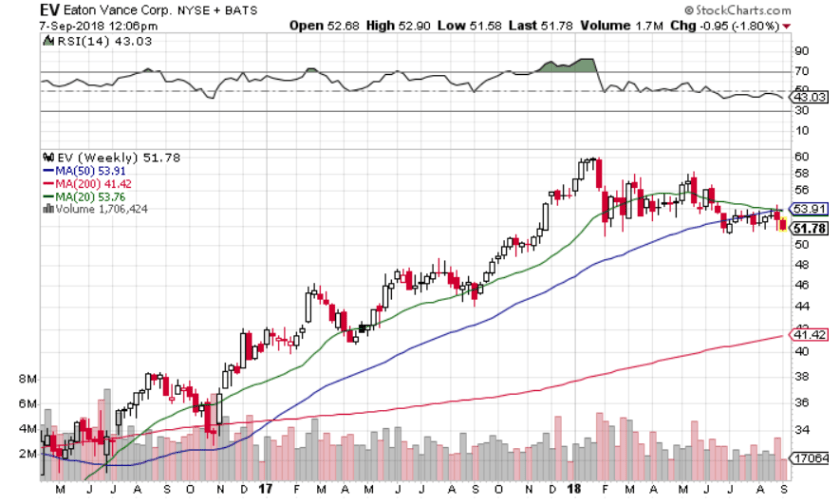
Eaton Vance Corp $EV


EV


 This post should not be considered as investment advice or a recommendation to purchase any particular security, strategy or investment product. References to specific securities and issuers are not intended to be, and should not be interpreted as, recommendations to purchase or sell such securities. Information contained herein has been obtained from sources believed to be reliable, but not guaranteed. 

The Challenge for Food & Beverage Retail Incumbents


“I was a pizza delivery boy at the Pizza Oven in Canton. I wanted to get fired so bad, I actually wrecked the delivery car, but they wouldn’t fire me because I was the only person they had working there.” – Marilyn Manson


“The secret of success in life is to eat what you like and let the food fight it out inside.” – Mark Twain


“Let’s face it: so much of what we consume is not driven by knowledge but by basic craving and impulse. The process of what we eat starts in our heads. And no one is more in our heads than a food industry that spends billions of dollars in marketing its message in every means possible.” – Chuck Norris, who, if you did not know already, can make onions cry


In this week’s piece the focus is on food & beverage retail and the challenge for incumbents with the rapidly changing dynamics within the industry. We start, however, with a quick update on uranium, which we touched upon at the start of the year and again recently.

The spot price of uranium increased to US dollars 26.60 per pound on Wednesday, exceeding the highs recorded in December last year following the back-to-back production suspension announcements by Cameco and Kazatomprom.

Uranium Participation Corporation, a pure play commodity exposure on uranium, also recorded new US dollar highs on Wednesday – mirroring the increase in the spot price of the commodity.

Share Price of Uranium Participation CorporationURPTF.pngSource: Bloomberg

With Cameco soliciting bids for 500,000 pounds of uranium for delivery between the end of this year and through 21 March 2019, and looking to purchase as much as a 15 million pounds from the spot market through the end of 2019, uranium prices may well have a lot further to run from here. How $URPTF performs from here on out is, in our opinion, worth monitoring.


Food & Beverage Retail


Domino’s Pizza: The “e-commerce company that happens to sell pizza”

Domino’s Pizza’s market capitalisation at the end of 2006 was US dollars 1.75 billion and the company had total debt of US dollars 742 million in debt.  By the end of 2007 the company’s market capitalisation had dropped by 55 per cent to US dollars 785 million while debt had ballooned to US dollars 1.72 billion – increasing by more than 130 per cent year-over-year. The following year things got even worse as market capitalisation dropped to US dollars 261 million – close to a seventh of what it was merely two years prior.

Today, the company’s market capitalisation stands at around US dollar 12.6 billion – a 48 fold increase since the end of 2008.

The turnaround in Domino’s Pizza’s stock price has quite simply been remarkable, to say the least.

The below chart shows the stock price performance of Google and Domino’s Pizza, respectively, starting from the time of Google’s public listing (Domino’s was listed a little over a month before Google).

Despite the sharp fall in Domino’s Pizza’s stock price between 2006 and 2008, its price performance compared to that of Google’s stock, starting from their respective public listings till date, is not too dissimilar

Price Performance: $GOOGL vs. $DPZDPZ GOOGL.pngSource: Bloomberg

In 2008, with sales flagging and the company under pressure, Domino’s revamped its menu and its ingredients.  In 2010, it became one of the first quick service restaurant chains to launch online ordering and did so by building an in-house technology team to lead the effort.

While these initiatives had a positive impact on the company’s bottom and share price, if we look at the chart comparing the price performance of Domino’s and the S&P500 Restaurants Sub-Industry Index, what is apparent is that something more drastic happened starting in 2012. That change according to company’s management was the realisation that Domino’s was no longer a pizza company but rather an “e-commerce company that happens to sell pizza”.

Price Performance: $DPZ vs. S&P500 Restaurants Sub-IndexDPZ Index.pngSource: Bloomberg

In 2012, Dennis Maloney, Chief Digital Officer, and Kelly Garcia, SVP of e-Commerce Development and Emerging Technologies, presented the idea to Domino’s Pizza’s board of directors and CEO that in order to endure and flourish in the cut-throat business of quick-service pizza, the company had to go further in its adoption of technology. The company had to undergo a digital transformation, they said. What the two executives pitched was nothing short of stripping down the company to its bare bones and rebuilding it with a new tech-first culture and an entirely different operational model.

Domino’s invested heavily in its online ordering system. The aim was to improve the overall consumer experience. It introduced the Domino’s Tracker – a bar that shows you the progress of your order, in real time. The tracker was an instant hit. It also enabled the creation of profiles as part of the ordering system. This was done so that returning customers could login and re-order items they had ordered in the past with only a few clicks.

In developing its online ordering system, the company recognised the growing importance of mobile and took a mobile-first approach by launching easy-to-use iOS and Android applications. These applications, too, were an instant success and their adoption accelerated the transformation of the company’s operating model.

Domino’s did not stop at mobile. It followed up the success of its mobile applications with the launch of Domino’s AnyWay, an innovative ordering platform that enables customers to place order through any one of their preferred devices, from anywhere. Customers can order using text messages, Apple TV, Amazon Echo, Google Home, Samsung Smart TVs, smart watches and via Tweets, Facebook messenger and Slack. In 2014, the company even launched its proprietary voice-ordering tool, nicknamed “Dom”, for its mobile applications.

On the two-way customer dialogue and engagement side, the company launched the ‘Think Oven’ campaign. Think Oven is a Facebook page, just not a typical one. It consists of two parts: ‘Projects’ and the ‘Idea Box’. In Projects the company asks for ideas on specific items such as the colours to use for their uniforms and chooses its favourite suggestions and rewards those who submitted them. Idea Box is an open suggestion box for any and all things to do with Domino’s. Suggestions submitted in the Idea Box have from time-to-time become the inspiration behind the launch of new projects.

To track the performance of and glean insights from all the digital initiatives, the company built an analytics team. This team introduced A/B testing – the process of comparing two versions of a web page to see which one performs better – and used it to help the company better understand what did and did not work in driving sales. This in turn fostered a cultural of innovation; the company started experimenting with different ideas and by introducing new products and adopting those that were successful in increasing sales and / or profitability.

With all the digital initiatives underway, the company did not stay quiet about them. Instead, it used them as part of its marketing campaigns and pushed forward the idea that Domino’s is an innovative, tech-driven food company. It launched Domino’s Live – a tool allowing customers to watch their order being prepared live. It also placed the its live Twitter feed on the front page of its website – the feed captures every conversation about Domino’s on Twitter, irrespective of whether it is positive or negative.

The result of all these efforts is that digital sales now make up the majority of the company’s sales with mobile representing half of all digital sales, technology is now the company largest department in terms of employee headcount, more than a half million orders have been placed using Dom since its launch, and Pizza Hut from being the forerunner, is now a very distant second quick service pizza chain in the US. And of course, the incredible price performance of its stock.


Not the Only One

Domino’s is not the only quick service chain to undergo a drastic transformation. McDonald’s is another. The world’s largest food chain has revamped its iconic quarter pounder in the US, which is now made using never-frozen beef patties in each and every one of its restaurants in the US. (Fast Company has a fantastic piece on McDonald’s’ transformation that is well worth the read.)

Dunkin’ Donuts too has taken steps toward a drastic digital transformation of its business and is starting to reap the rewards.


 UberEats and the Challenge for Incumbents

What the Domino’s, McDonald’s and Dunkin’ Donuts transformation experiences show is the drastic amounts of effort and patience that is needed by incumbent food & beverage retail businesses to overhaul their businesses in order to thrive in today’s hyper-connected world.

And it is not getting any easier.

With the growth of food delivery platforms, such as UberEats, Deliveroo and GrubHub, in recent years, the competitive landscape is gradually tilting in favour of niche and small scale food businesses and giving rise to new food businesses that are completely eschewing a physical presence and simply delivering through these platforms.

Prior to the launch of these platforms, restaurants had to invest in hiring a driver and a vehicle if they wanted to cater to delivery demand. This model of having a proprietary delivery service was neither the most efficient use of capital nor of time. For instance, when a food business is running its own delivery service, it has to wait for its drivers to return to do the next round of deliveries, which is a significant opportunity cost for all but the very biggest food chains. Drivers on food delivery platforms, on the other hand, do not have to return and restaurants have access to the drivers that are both free and nearest to them.

The entry of Uber into the food delivery business, in particular, has been a game changer in our minds. And Uber CEO, Dara Khosrowshahi, confirmed just as much at the Code Conference in March when he stated that UberEats already has a US dollars 6 billion bookings rate.

The reason UberEats is such a game changer is that Uber already has a very large number of drivers signed up for its ride-sharing business and it gives these drivers the option to drive for just Uber, just for UberEats or both, i.e. Uber already has a very large captive source of drivers that it can convert to driving for UberEats at little to no cost.

The upshot of the proliferation of food delivery platforms for customers is that they now have the choice of placing orders among dozens (if not hundreds) of restaurants and as well as the convenience of ordering from multiple restaurants to accommodate varying dietary preferences. This is turn is allowing niche and small food businesses to compete for delivery demand with the very largest food businesses.


Investment Perspective


The investment implications of the changing competitive dynamics are really quite simple: there are very few listed food & beverage retail businesses that are resilient to the changing industry dynamics and therefore worth investing.

For now the only quick service restaurant stock we like is Dunkin’ Donuts $DNKN and we are also looking at Yum! Brands $YUM as a potential long.

Disclaimer: No pizzas were consumed in preparation of this week’s piece


This post should not be considered as investment advice or a recommendation to purchase any particular security, strategy or investment product. References to specific securities and issuers are not intended to be, and should not be interpreted as, recommendations to purchase or sell such securities. Information contained herein has been obtained from sources believed to be reliable, but not guaranteed. 

Trucking: High Freight Rates and Record Truck Orders


“I don’t think there’s any real motivation for somebody to be a truck driver. Mine was simple; dad was a truck driver, I wanted to own one.” – Lindsay Fox, Australian billionaire and founder of Australia’s largest privately held logistics company


“A man who has never gone to school may steal from a freight car; but if he has a university education, he may steal the whole railroad.” – Theodore Roosevelt


“Look for opportunities with pent-up demand.” – Sam Zell, American billionaire and real estate mogul


If you live in or have recently spent even a few days in any major city, chances are you have witnessed dozens of delivery vehicles whizzing throughout the city on any given day of the week. In the US, delivery trucks from the United States Postal Service, FedEx, and UPS spend all week weaving through cities across the country, retrieving and delivering parcels. The increasing number of delivery trucks on the road reflects the boom in online shopping.

According to the US Census Bureau, e-commerce now accounts for 8.9 per cent of total retail sales in the US, and grew by 16 per cent year-over-year in 2017. This growth in online retail is not only being directly driven by Amazon but also by traditional brick-and-mortar retailers complementing their physical presence with an online existence in a bid to keep pace with Amazon. Take for instance, Target and Williams Sonoma, both companies that recently reported earnings, citing robust growth in online sales as a reason for their expectations beating results.

For the three-month period ended 4 August, Target reported that comparable digital channel sales were up 41 per cent year-on-year and were responsible for more than a fifth of of the 6.5 per cent overall like-for-like sales growth during the quarter — the highest in 13 years.

Williams Sonoma this week reported year-over-year net revenue growth of 6.1 per cent for the last quarter. Online sales outpaced brick-and-mortar sales and now account for 53.9 per cent of the company’s overall sales, up from 53.7 per cent the previous quarter.

American retailers, particularly those with a strong online presence and / or differentiated brick-and-mortar offering, are benefitting from very strong consumer sentiment. Low unemployment levels and a windfall from tax cuts is increasing US consumers’ willingness to spend. And this is pushing US retailers and manufacturers to stock-up their inventories in expectations of consumer spending remaining robust all the way up to the end of the year,

Domestic freight demands are surging on the back of the strong re-stocking needs of retailers and manufacturers. This escalation in in turn is driving the demand for trucking services. Trucks are used to transport more than two-thirds of total US freight, taking imports from ports to distribution centres and raw materials to factories.

The trucking industry, after years of lacklustre demand, scaled back capital investments and today lacks the capacity to adequately cater for the rising demand. The supply-demand imbalance in the trucking market means that companies are unable to get their cargo moved in time and rising spot trucking rates are eating into their margins. In July rates for truckload services increased by more than 10 per cent year-over-year – the highest ever increase since records have been kept – continuing the streak of rising year-over-year prices for a seventeenth consecutive month – the longest such streak since the industry was deregulated in 1980.

As a corollary of the supply-demand imbalance, haulage companies are ordering a record amount of heavy-duty vehicles. In July this year, an all-time record 52,400 heavy-duty trucks were ordered as compared to the less than 19,000 heavy-duty trucks ordered during the same period last year. Month-over-month, heavy-duty truck orders were also up, increasing by 24 per cent. What makes the record orders even more astonishing is that trucking companies coming into the month had already been on a six-month long ordering spree and that July has typically been the slowest month for new orders.

The exceptional demand for heavy-duty vehicles has pushed the backlog at truck factories to nine months as compared to four to five months normally – meaning that any company ordering a heavy-duty truck today should only expect to receive it in the second quarter of 2019.

The availability of heavy-duty vehicles is not the only bottleneck faced by the trucking industry. A shortage of new drivers, an ageing pool of qualified drivers and the implementation of new regulations in December last year requiring truckers to electronically log their hours are compounding the problem further.

Long-haul driving is a tough sell – long working hours and extended periods away from home are not exactly the characteristics that pull in new recruits. Add to all of this a booming economy with jobs aplenty in other industries and it comes as no surprise that trucking companies are raising pay and are offering sign-on bonuses.

Given the inability of trucking companies to fully exploit the strong demand for their services due to the above described bottlenecks, we think industries vertically adjacent to trucking may provide a superior investment opportunity.


Investment Perspective


Allison Transmission $ALSN is the leading original equipment manufacturer of commercial-duty automatic transmissions and electric hybrid propulsion systems.

$ALSN has an impressive 60 per cent market share of the global on-highway fully-automatic transmission market. Specifically, the company has 68 and 71 per cent market shares in the Class 8 (i.e. heavy-duty) straight truck and Class 6 & 7 (i.e.) medium-duty truck transmissions, respectively. Sales of fully-automatic transmissions account for almost two-thirds of the company’s revenues; more than half of the automatic transmission segment’s sales come from the heavy- and medium-duty truck transmissions.

The company’s top customers are leading heavy-duty truck manufacturers Daimler, Paccar, Volvo, and Navistar. These customers made up 49 per cent of $ALSN’s sales in 2017.

With new long haul truck orders running at record levels, we do not expect $ALSN’s customers to experiment when it comes to critical components that go into assembling a heavy-duty vehicle. Moreover, it is unlikely that any other manufacturer has the capacity or expertise to deliver the sheer quantity of transmissions that will be needed to clear the order backlog. Therefore, we expect demand for $ALSN’s automatic transmissions to remain strong as long as the heavy-duty truck manufacturers’ order books remain full.

Lastly, the company trades at an undemanding valuation of 11.3x price to consensus 2018 earnings and has an industry leading return on invested capital of 27.0 per cent (based on trailing twelve month data).

ALSN.PNG


We are long $ALSN.

In addition to $ALSN, we are looking into Navistar International $NAV and Commercial Vehicle Group $CVGI as potential long trade ideas under the trucking theme. We will send trade alerts in due to course should we decide to add either or both of these stocks to our long trade ideas.


This post should not be considered as investment advice or a recommendation to purchase any particular security, strategy or investment product. References to specific securities and issuers are not intended to be, and should not be interpreted as, recommendations to purchase or sell such securities. Information contained herein has been obtained from sources believed to be reliable, but not guaranteed.